I’m seeing a lot of negativity from developers about AI coding. I get it—I was also sceptical at first. But the evidence is in, and it’s not subtle.
The S&P software index just had its worst month since 2008. Salesforce, ServiceNow, Adobe all down 20-40%. Traders at Jefferies are calling it the “SaaSpocalypse”. 245,000 tech jobs were cut in 2025, with Salesforce replacing half its customer support workforce with AI.
This isn’t speculation. This is happening now.
We’ve been here before
As developers, we’ve seen this pattern play out with every major advancement. People resist, then adapt, then forget there was ever resistance.
We’re not punching holes in cards like my father did back in the day. We’re not writing Assembly for web apps. We’re not editing source files in prod over FTP (I have!). Each generation of tooling faced scepticism before it became the baseline.
AI coding is no different, except it’s moving faster than any shift before it.
Build, don’t buy
For decades, the equation was simple: buy software, don’t build it. Only big companies could afford internal tools teams. Everyone else subscribed to platforms that are “good enough” or overpaid for features they don’t use.
AI is rewriting that equation.
Klarna ditched Salesforce and Workday, consolidating 1,200 services with AI. Their revenue per employee jumped from $400k to $700k in a year. They didn’t replace SaaS with an LLM. They consolidated, simplified, and used AI to build what they needed.
This doesn’t mean the software industry is dead. Complex, regulated, integrated platforms will survive. Foundational infrastructure: databases, operating systems, cloud platforms are not going anywhere.
There will always be some buyers. Not everyone has the skills or appetite to build. But the pool of companies that can build just got a lot bigger.
When the cost to build and host approaches zero, the barriers that protected incumbents disappear. Every frustrated customer with technical ability becomes a potential competitor. YouTubers are already cloning popular SaaS products in weekend videos just to demonstrate how good AI coding has become. What used to take a funded team now takes a solo developer with an afternoon.
Commodity SaaS faces a double threat: customers building their own, and upstarts undercutting enterprise margins. If your product is just a database with a UI and some business logic, you could be in trouble. Ask yourself if a product manager or developer with AI can replace your product in a weekend. Better yet - try doing it yourself!
What I’ve seen firsthand
I’ve been an engineering leader for years. Managing teams, sitting in meetings, doing the work that keeps organisations moving. Not a lot of time for hands-on coding.
Here’s what I built in a single week with agentic coding:
- An invoice exporter and archiving program for our finance department
- A GDPR request handler for our support department
- A custom Jira + Notion migration program to Linear for my tech department
- An AI + OCR receipt scanner and tracker for my own filing needs
- A markdown editor with text analysis for my writing
All in a few hours of prompting. All while keeping up my regular managerial tasks and busy meeting schedule. None of these drive revenue directly, but some save developer time, others help with compliance.
Yesterday, I built a component for our CMS website in two hours starting from zero. I didn’t know the repo, didn’t know how to run the app, didn’t know the codebase. Two hours later: finished component, running Docker app. Only one piece of feedback from my designer.
I’ve produced more code and value in the last two weeks than in my previous four years as an engineering manager.
It’s easy now. But it didn’t start like that.
The skill isn’t prompting
My early attempts didn’t work. I’d fire off prompts and get frustrated when the output wasn’t what I wanted. Sound familiar?
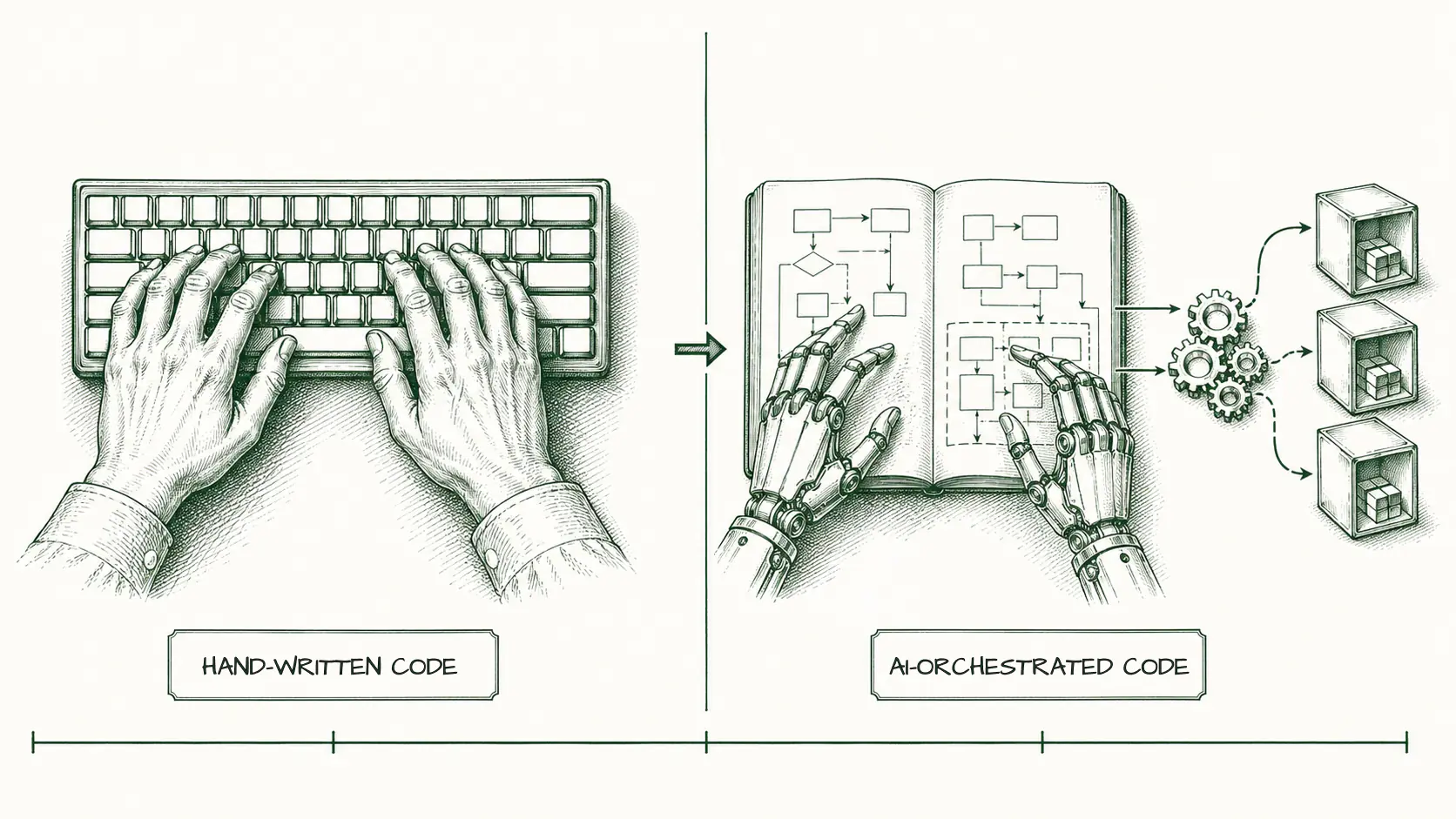
The shift happened when I started planning first. Specifying what I wanted to build before asking the AI to build it. Breaking problems down to first principles. Defining acceptance criteria. Thinking through edge cases. You can even ask your AI to do this!
This is why AI won’t replace developers. The skill isn’t prompting. It’s specification and judgement.
You need to break the problem down to first principles. You need to give precise technical instructions. And of course, you need to understand when the result is wrong or adds risk. The AI will confidently hand you code that looks right but isn’t. If you can’t evaluate the output, you can’t use the tool effectively.
This is what separates useful output from frustrating noise. The people who will succeed with AI coding will be those who understand the problem enough to direct the work and validate the result.
That’s a skill experienced developers already have.
The window is closing
Here’s the uncomfortable truth: if you’re not experimenting with agentic coding yet, the gap is widening.
The developers who figure this out early will ship faster, deliver more value, and become indispensable. Those who wait for it to be “proven” will find themselves competing with people with a two-year head start.
This isn’t about replacing developers. It’s about augmenting them. The best engineers I know are already using these tools. Not because they’re lazy—because they’re strategic.
The negativity I see online feels like people defending territory that’s already shifting beneath them. I understand the instinct. But the evidence is overwhelming.
The software industry is changing. It’s time to adapt.
Sources
- S&P software index worst month since 2008 — Yahoo Finance
- Salesforce, ServiceNow, Intuit stock declines — CNBC
- 245,000 global tech layoffs in 2025 — Digital Journal
- Salesforce replaces support staff with AI — Salesforce Ben
- Klarna ditches Salesforce/Workday, $400k→$700k revenue per employee — TechCrunch